Lost in Lille’s Architectural Soul – You Won’t Believe What I Discovered
Walking through Lille feels like flipping through the pages of a living architecture book—each street corner tells a story. From cobbled alleys lined with Flemish townhouses to sleek modern spaces blending into historic facades, the city is a dialogue between old and new. I came for the culture, but stayed for the buildings that breathe history, character, and quiet rebellion. This isn’t just sightseeing—it’s feeling the city, one stone, one beam, one unexpected courtyard at a time. Lille does not shout its beauty; it whispers it in the curve of a gable, the patina of a weathered brick, the soft echo of footsteps in a hidden passageway. For travelers who value depth over dazzle, authenticity over artifice, this northern French gem offers a rare kind of urban intimacy—one built not just with mortar and timber, but with memory and meaning.
First Impressions: Stepping Into a City of Contrasts
From the moment you step off the train at Gare Lille Europe, the city begins its quiet revelation. The station itself—a sleek, glass-and-steel structure designed in the 1990s as part of the Eurostar network—stands as a symbol of Lille’s modern ambitions. Yet just a short walk away, the skyline shifts dramatically. The sharp lines of contemporary architecture give way to the warm, undulating silhouettes of red-brick rooftops and stepped gables. This contrast is not accidental; it is the essence of Lille’s architectural identity. Positioned at the crossroads of France, Belgium, and the broader Low Countries, Lille has long been a meeting point of cultures, economies, and design philosophies. Its buildings reflect centuries of shifting borders, trade routes, and industrial evolution.
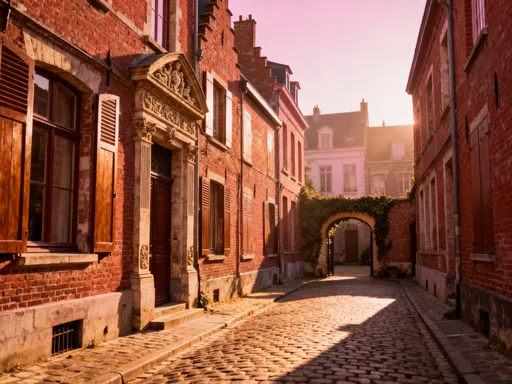
The city’s dual character becomes even clearer as you enter the Vieux Lille district. Here, Haussmann-style façades with their elegant stone cornices and wrought-iron balconies stand shoulder to shoulder with Flemish townhouses whose ornate brickwork and triangular gables speak of Antwerp and Bruges. This architectural dialogue is not chaotic—it is harmonious, layered like sediment in rock. The blend is so seamless that one might mistake it for deliberate urban choreography. In reality, it is the product of organic growth, resilience, and a deep respect for heritage. Lille was rebuilt after wartime damage with care, not haste, ensuring that new construction honored the rhythm and scale of what came before.
What strikes visitors most is the human scale of the city. Unlike the grand boulevards of Paris or the monumental plazas of Madrid, Lille’s streets feel intimate, almost domestic. Buildings rarely rise above five or six stories, and the use of warm-colored brick creates a sense of cohesion. Even modern developments, such as those in the Euralille district, incorporate materials and proportions that echo the historic core. This sensitivity to context ensures that the city never feels disjointed. Instead, it unfolds like a narrative—each neighborhood adding a new chapter, each façade contributing a sentence to the story of Lille’s soul.
Vieux Lille: Where Time Stands Still (But Life Keeps Moving)
If Lille has a beating heart, it is Vieux Lille. This meticulously restored quarter, centered around the Place du Général de Gaulle and the adjacent Rue de la Monnaie, is a masterclass in architectural preservation. Walking its narrow, cobbled lanes feels like stepping into a 17th-century Flemish painting—except that the scene is alive. Children ride bicycles past pastel-colored shutters, café owners arrange chairs on stone-paved terraces, and laundry flutters from wrought-iron balconies. The past is not frozen here; it is lived in, cherished, and gently adapted.
The architecture of Vieux Lille is a testament to the fusion of French and Flemish aesthetics. The townhouses, many dating back to the 1600s, feature thick brick walls, steeply pitched roofs, and intricately carved stone surrounds around doors and windows. Their façades are often divided into vertical sections, with decorative elements concentrated at the top—particularly the stepped or curvilinear gables that crown the buildings like lace headdresses. These gables, once a symbol of civic pride and prosperity, now serve as visual anchors, guiding the eye upward and giving the streets their distinctive skyline.
What sets Vieux Lille apart from other historic districts is its authenticity. Unlike some European cities where old quarters have been overly commercialized or turned into open-air museums, Lille’s old town remains a vibrant residential neighborhood. Families live in these centuries-old homes, often preserving original features like exposed wooden beams, spiral staircases, and inner courtyards. These courtyards—known locally as cours intérieures—are among the district’s best-kept secrets. Tucked behind unassuming street doors, they open into quiet, sun-dappled spaces where ivy climbs brick walls and potted geraniums bloom in summer. Many have been carefully restored, with modern amenities discreetly integrated to meet contemporary living standards without compromising historical integrity.
Preservation in Vieux Lille is not about nostalgia—it is about continuity. The city has invested heavily in restoration programs that prioritize original materials and craftsmanship. Local artisans skilled in traditional bricklaying, stonemasonry, and woodcarving have played a crucial role in maintaining the district’s authenticity. At the same time, adaptive reuse has allowed historic buildings to serve new functions: a former convent now houses a cultural center, an old school has been converted into apartments, and centuries-old cellars host wine tastings. This balance between conservation and evolution ensures that Vieux Lille is not a relic, but a living, breathing part of the city.
The Flemish Legacy: Bricks, Gables, and Craftsmanship
Lille’s architectural DNA is deeply rooted in the Flemish tradition. For centuries, the city was part of the County of Flanders, and its built environment still bears the imprint of that heritage. The most visible hallmark is the use of brick—locally produced, hand-fired, and laid with precision. Unlike the smooth stone façades of southern France, Lille’s buildings glow with the warmth of terracotta, their surfaces textured by centuries of weather and repair. The brickwork is not uniform; it is expressive, with patterns created through alternating colors, recessed panels, and decorative corbelling.
Equally distinctive are the stepped gables, a feature borrowed from Dutch and Belgian cities. These vertical crowns rise above the roofline, their tiers creating a rhythmic silhouette against the sky. Once a sign of wealth and status—taller gables indicated greater prosperity—they now serve as iconic markers of Lille’s identity. The Vieille Bourse, or Old Stock Exchange, is perhaps the most celebrated example of Flemish Renaissance architecture in the city. Completed in 1652, this ornate building surrounds a central courtyard with arcades on three sides, each façade adorned with sculpted figures, floral motifs, and intricate stonework. Originally a hub of mercantile activity, it now hosts book markets and classical music concerts, its grandeur preserved but repurposed.
The choice of materials was not merely aesthetic—it was practical. The region’s clay-rich soil made brick a natural building material, while sandstone, quarried nearby, was used for decorative elements like window surrounds and door frames. These materials also provided resilience against the damp, maritime climate of northern France. Thick brick walls offered insulation, while steep roofs facilitated rapid water runoff. Even the orientation of buildings was carefully considered, with narrow street fronts maximizing space in a densely populated urban core.
What is most remarkable is the level of craftsmanship evident in these structures. Masons and carpenters of the 17th and 18th centuries worked with precision and pride, leaving behind details that reward close inspection: a carved lion’s head above a doorway, a spiral column on a balcony, a wrought-iron weather vane shaped like a ship. These elements were not mass-produced; they were hand-forged, reflecting a culture that valued artistry in everyday life. Today, that tradition continues through restoration efforts that employ traditional techniques, ensuring that the soul of Flemish craftsmanship endures.
Industrial Echoes: Factories Turned Into Cultural Spaces
Beyond its aristocratic façades and merchant houses, Lille’s architecture tells another story—one of industry, labor, and reinvention. During the 19th century, the city was a powerhouse of textile manufacturing, its economy fueled by cotton, wool, and lace production. Factories and warehouses sprang up in neighborhoods like Wazemmes, Fives, and Moulins, their utilitarian brick structures built for function rather than beauty. Yet today, these industrial relics have been reborn as vital cultural spaces, proving that architecture can evolve without erasing its past.
One of the most striking examples is the transformation of old textile mills into artist studios and creative hubs. In Wazemmes, a former factory now houses Le Fresnoy—Studio National des Arts Contemporains, a renowned institution for experimental art and digital media. The building retains its original brick walls, exposed timber beams, and large industrial windows, creating a raw, atmospheric backdrop for avant-garde installations. Similarly, in Fives, a disused locomotive workshop has been repurposed into a multi-use complex that includes performance spaces, co-working areas, and a design school. These projects follow the principle of adaptive reuse—a design philosophy that values memory, sustainability, and authenticity.
The success of these conversions lies in their respect for original materials and spatial character. Rather than covering up signs of age, designers highlight them: rusted metal beams are left exposed, cracked plaster is preserved as texture, and original flooring is restored rather than replaced. This approach creates a dialogue between past and present, where the scars of industry become part of the aesthetic. It also fosters a sense of continuity, reminding visitors that Lille’s cultural vibrancy is built on a foundation of labor and innovation.
Markets, too, have found new life in industrial shells. The Wazemmes Market, one of the largest in northern France, operates in a covered hall that was once a rail freight depot. Its steel trusses and high ceilings create a cathedral-like atmosphere, where the scent of fresh produce, spices, and grilled meats fills the air. On weekends, the market draws locals and tourists alike, transforming the space into a living social fabric. Other former warehouses now host food halls, craft fairs, and community events, reinforcing the idea that architecture should serve people, not just ornament the skyline.
Modern Interventions: When New Meets Old
Lille’s architectural story does not end in the 18th or 19th century. The city has embraced contemporary design with a rare sensitivity, ensuring that new buildings enhance rather than disrupt the urban fabric. Nowhere is this more evident than in the Euralille district, a mixed-use development conceived in the 1990s to revitalize the area around the train station. Designed by architects including Jean Nouvel, Rem Koolhaas, and SANAA, Euralille is a bold experiment in urban integration—where glass, steel, and concrete coexist with historic brick and stone.
The district’s most iconic structure, the Lille Europe tower, soars above the city with a shimmering glass façade that reflects the changing light. Yet its base is grounded in human scale, with retail spaces, pedestrian walkways, and public plazas that invite interaction. Nearby, the Lille Courthouse, designed by Richard Rogers, features a transparent, color-coded interior that expresses function through form—justice literally laid bare. These buildings do not imitate the past; they converse with it. Their transparency, openness, and emphasis on light create a visual counterpoint to the solidity and opacity of older masonry structures.
Another standout is the Lille Métropole Museum of Modern, Contemporary and Outsider Art (LaM), located just outside the city center. Set within a park, the museum’s design by Jacques Ferrier blends clean geometric forms with natural materials like wood and stone. Its undulating roof mimics the surrounding landscape, while large glass walls dissolve the boundary between interior and exterior. Inside, the gallery spaces are flexible and luminous, designed to accommodate a diverse collection ranging from Picasso to self-taught artists. LaM exemplifies how modern architecture can be both innovative and contextual, enhancing its environment without dominating it.
What unites these projects is a commitment to urban harmony. Planners have prioritized walkability, green space, and natural light, ensuring that even large-scale developments feel integrated rather than imposed. Building heights are carefully regulated to preserve sightlines to historic landmarks, and materials are selected to complement the city’s warm palette. This thoughtful approach reflects a broader philosophy: that progress does not require erasure, and that the future can be built upon the foundations of the past.
Hidden Courtyards and Secret Passages: The City’s Quiet Corners
While Lille’s grand squares and famous façades draw the crowds, its true architectural poetry lies in the overlooked corners—the narrow passageways, the walled courtyards, the modest workers’ housing that whisper stories of everyday life. These spaces, often hidden behind unmarked doors or tucked between larger buildings, offer a more intimate, personal experience of the city. They are not designed for spectacle, but for living.
One of the most enchanting examples is the Courée de la Petite-Chapelle, a row of 19th-century workers’ cottages nestled in a quiet alley near the city center. Built for textile laborers, these small, two-story homes were designed for efficiency and community. Each house opens onto a shared courtyard, where residents once hung laundry, shared meals, and watched children play. Today, many have been restored with care, their brick façades repointed, their wooden doors repainted in soft pastels. Though modest in scale, they exude charm and dignity, a testament to the value of humane design.
Similar cités ouvrières—workers’ housing developments—can be found throughout Lille, particularly in neighborhoods like Moulins and Fives. Inspired by utopian social ideals of the 19th century, these communities were designed to provide decent, sanitary living conditions for industrial workers. They feature uniform façades, shared green spaces, and access to light and ventilation—radical concepts at the time. Unlike the cramped tenements of other industrial cities, Lille’s worker housing reflects a belief in the dignity of labor and the importance of environment in shaping well-being.
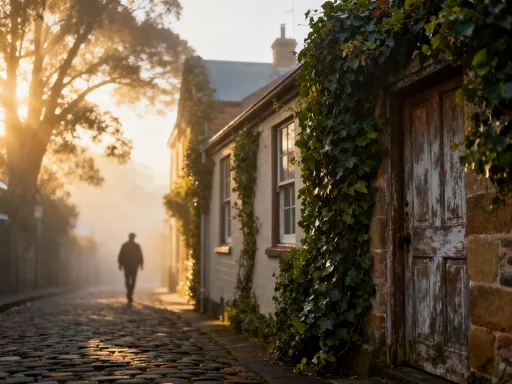
Then there are the impasses and passages couverts—narrow, covered alleyways that snake through the city like secret veins. Some date back to the medieval period, originally serving as service routes for merchants or shortcuts for residents. Today, they are oases of quiet, their cobblestones worn smooth by centuries of footsteps. Vines climb the walls, ivy drapes from wrought-iron railings, and the sound of the city fades into a hush. These passages are not on most tourist maps, but they are beloved by locals who value their seclusion and timeless atmosphere. To walk through one is to feel the pulse of Lille’s quieter, more contemplative side.
Why Lille’s Architecture Matters—And Why You Should Care
Architecture is more than shelter. It is memory made visible, identity shaped in brick and beam. In Lille, every building tells a story—not just of style or engineering, but of people, resilience, and the passage of time. The city’s architectural richness lies not in any single monument, but in the layered conversation between eras, between function and beauty, between public grandeur and private intimacy.
What makes Lille exceptional is its refusal to choose between old and new. Instead, it embraces both, weaving them into a coherent, evolving narrative. The restoration of Vieux Lille, the adaptive reuse of industrial sites, the sensitive integration of modern design—these choices reflect a deep cultural value: that heritage is not a burden, but a foundation. They also offer a model for cities worldwide grappling with how to grow without losing their soul.
For travelers, particularly those who seek meaningful connection over checklist tourism, Lille offers a rare invitation: to slow down, to look closely, to feel the texture of a place. It asks you to notice the way light falls on a stepped gable at dusk, the sound of a door creaking in a hidden courtyard, the warmth of a brick wall under your fingertips. These are not mere details—they are the language of belonging.
In a world where cities increasingly look alike—dominated by glass towers and global chains—Lille stands as a quiet rebellion. It proves that beauty can be humble, that history can be lived, and that the built environment can foster not just efficiency, but emotion. To walk through Lille is not just to see architecture—it is to feel it in your bones, to be reshaped, however slightly, by its quiet grace. And perhaps, to carry a piece of it with you long after you’ve left.