You Won’t Believe These Hidden Architectural Gems in The Hague
When you think of The Hague, politics and beaches might come to mind—but not its architecture. I was just as surprised when I stumbled upon its quiet streets lined with bold, unexpected designs. From surreal modernist homes to forgotten Art Deco corners, the city’s architectural soul runs deeper than most realize. This isn’t just about buildings; it’s about seeing a familiar place in a whole new light. While Amsterdam dazzles with gabled facades and canal reflections, The Hague reveals its charm slowly, through understated innovation and thoughtful urban planning. It’s a city where function meets elegance, where international presence blends with local character, and where every neighborhood tells a different story through brick, glass, and steel. For the curious traveler, especially those who appreciate quiet beauty over crowded landmarks, The Hague offers a rich and rewarding journey into the heart of Dutch design philosophy.
Beyond Amsterdam: Why The Hague Deserves an Architectural Second Look
The Netherlands is often associated with Amsterdam’s iconic canal houses, their narrow gables leaning precariously over waterways like sentinels of history. Yet just 60 kilometers south, The Hague presents a strikingly different architectural identity—one that is less flamboyant but no less compelling. As the country’s administrative center and the seat of the Dutch government, the city has long prioritized function, order, and accessibility in its urban development. This practical mindset, however, has not come at the expense of creativity. On the contrary, The Hague’s built environment reflects a quiet confidence in design that serves both people and purpose.
Unlike Amsterdam’s tightly packed medieval core, The Hague expanded during the 19th and 20th centuries with room to breathe. Its wide boulevards, spacious parks, and low-rise skyline create an atmosphere of openness, inviting closer inspection. The city’s proximity to the North Sea also plays a role in shaping its aesthetic—coastal light bathes its facades in soft, changeable tones, enhancing the textures of brick, stone, and concrete. There is a sense of calm here, a deliberate pacing that encourages walking, observing, and appreciating subtle details rather than rushing from one photo-worthy monument to the next.
Moreover, The Hague’s status as a diplomatic hub has introduced a layer of international sophistication without disrupting its Dutch roots. Embassies, international courts, and global organizations have commissioned buildings that respect local design principles while incorporating discreet global influences. The result is a cityscape that feels both grounded and cosmopolitan—a rare balance achieved through careful planning and architectural restraint. For visitors willing to look beyond the postcard image of windmills and tulips, The Hague offers a deeper understanding of how architecture can shape not just cities, but ways of living.
The Quiet Rebellion of Dutch Modernism in Zuiderpark
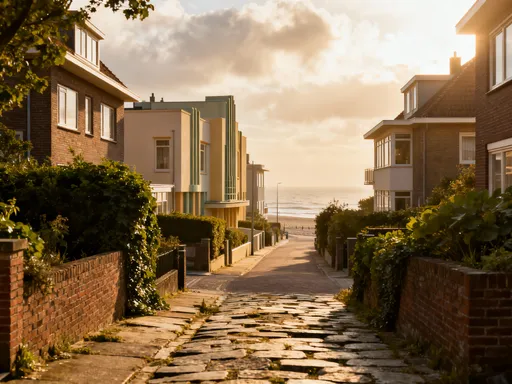
Hidden in the southern reaches of The Hague, Zuiderpark is more than a green escape—it’s a living museum of early Dutch modernism. Developed primarily between the 1920s and 1950s, this residential area emerged from a national movement to improve living conditions through rational, human-centered design. Architects like J.J.P. Oud, a founding member of the De Stijl movement, and Frits Peutz, known for his expressive use of brick, contributed to a vision of urban housing that was both practical and poetic. Their work in Zuiderpark reflects a belief that beauty and functionality are not opposites, but allies in creating dignified spaces for everyday life.
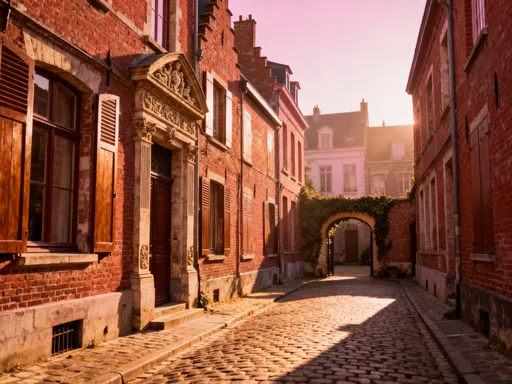
Walking through the neighborhood, one notices the careful attention to proportion and materiality. Facades are composed of warm red and brown brick, laid in rhythmic patterns that add visual interest without ornamentation. Windows are often asymmetrically placed, breaking the monotony of grid-like arrangements while maximizing natural light. Balconies and recessed entries create depth, giving each home a sense of individuality within a cohesive whole. Green spaces are integrated into the layout, with courtyards and tree-lined streets reinforcing the connection between architecture and nature.
What makes Zuiderpark particularly remarkable is how well these designs have aged. Many of the homes have been carefully maintained or thoughtfully renovated, preserving their original character while meeting modern standards of comfort and energy efficiency. Residents take pride in their surroundings, and local preservation groups actively advocate for the protection of these architectural treasures. For the observant visitor, a walk through Zuiderpark is not just a tour of buildings—it’s an immersion into a philosophy of design that values clarity, community, and quiet innovation.
Art Deco Echoes in the City Center: A Forgotten Legacy
While The Hague is not typically celebrated for its Art Deco architecture, a closer look reveals a subtle but enduring presence of the style in its city center. Scattered along Prinsestraat, Groenewegje, and surrounding side streets, buildings from the 1920s and 1930s bear the hallmarks of a global design language that once symbolized modernity and progress. Stepped facades, geometric stone carvings, and stylized metal grilles—often in the form of sunbursts or floral motifs—hint at a time when The Hague embraced contemporary trends with characteristic restraint.
One notable example is a former department store on Neude Square, now repurposed into retail and dining spaces. Its ground floor retains original terrazzo flooring and bronze-framed windows, while the upper levels feature vertical fluting and a central tower element reminiscent of American skyscrapers of the era. Though less flamboyant than Art Deco landmarks in cities like New York or Mumbai, these buildings reflect a Dutch interpretation of the style—one that favors understatement over spectacle, craftsmanship over extravagance.
Many of these structures have been adaptively reused, a testament to their durability and timeless appeal. Cafes now occupy ground floors once used for banking or commerce, their interiors blending vintage details with modern furnishings. Some facades have been restored with meticulous care, revealing original color schemes and decorative elements long hidden beneath layers of paint. This quiet revival speaks to a growing appreciation for architectural heritage among locals and city planners alike. For the visitor, discovering these Art Deco remnants is like finding hidden notes in a familiar melody—unexpected, yet perfectly in tune with the city’s character.
Brutalism with a Human Touch: The Hoftoren and Beyond
No discussion of The Hague’s architecture would be complete without addressing Brutalism—a style often misunderstood, yet deeply embedded in the city’s identity. The Hoftoren, completed in 1970, stands as one of the most prominent examples. Rising 75 meters above the skyline, this office tower was originally built to house corporate tenants but has since become a symbol of the city’s mid-century ambition. Constructed from exposed concrete, its facade features a rhythmic pattern of window openings and vertical fins that create a sense of order and transparency—values that resonate with The Hague’s role as a center of governance and international law.
At first glance, the Hoftoren may appear austere, even imposing. Yet upon closer inspection, its design reveals a surprising warmth. The textured concrete, cast with wooden formwork, carries the imprint of its making, adding tactile richness to its surface. The building’s base opens to the street with wide plazas and covered walkways, encouraging pedestrian flow and public interaction. In recent years, efforts to clean and restore the facade have revealed its original gray-beige tone, softening its appearance and integrating it more harmoniously into the urban fabric.
Public perception of the Hoftoren has evolved significantly. Once criticized as a cold relic of an outdated era, it has gained a new following among architects, photographers, and younger residents who appreciate its honesty of materials and structural clarity. It is no longer seen as an eyesore, but as a bold statement of a time when architecture aimed to serve the public good through clarity and durability. Beyond the Hoftoren, other Brutalist structures—such as the former Ministry of Social Affairs building—demonstrate how the style was adapted to Dutch sensibilities, favoring human scale and integration with green spaces over monumental grandeur.
The Influence of International Institutions on Urban Design
As the host city of the International Court of Justice, the International Criminal Court, and over 150 embassies, The Hague’s architecture bears the quiet imprint of global diplomacy. Unlike capital cities where embassies compete for prominence with grand palaces and ornate gates, The Hague’s diplomatic district favors discretion and integration. Buildings are designed to reflect national identities while respecting the city’s architectural language of restraint, proportion, and sustainability.
Take, for example, the Embassy of Finland, housed in a low-rise structure with large glass facades and a wooden canopy that evokes Nordic forest architecture. Or the German Embassy, which blends modernist simplicity with subtle references to Bauhaus design, using clean lines and neutral tones to create a sense of openness and transparency. These buildings do not dominate their surroundings; instead, they contribute to a streetscape that feels diverse yet cohesive, international yet rooted in place.
This diplomatic presence has also influenced public buildings and infrastructure. The construction of the World Forum Convention Center, adjacent to the Peace Palace, was designed to accommodate international visitors while maintaining a low visual impact. Its glass and steel structure reflects the sky and surrounding trees, minimizing its footprint on the landscape. Similarly, security considerations are addressed with subtlety—barriers are integrated into landscaping, and surveillance is discreet, preserving the city’s welcoming atmosphere.
The result is an urban environment where global and local coexist in harmony. For the visitor, this means encountering architecture that tells stories not just of nations, but of shared values—peace, justice, dialogue. It is a reminder that design can be a quiet form of diplomacy, shaping how people interact, move, and feel within a city.
Coastal Adaptation: How Scheveningen’s Architecture Evolved with the Sea
Scheveningen, The Hague’s seaside district, offers one of the most compelling case studies in adaptive architecture. Once a modest fishing village, it transformed in the 19th century into a popular seaside resort, attracting visitors with its wide beach and fresh sea air. This shift brought architectural changes—from simple wooden huts to grand hotels and entertainment complexes. But the sea, while a source of beauty and economy, also poses constant challenges: erosion, storms, and rising sea levels.
Over time, Scheveningen’s buildings have evolved to respond to these forces. Early 20th-century villas were constructed on elevated foundations, a practical solution that also added visual distinction. The Kurhaus, a historic spa hotel completed in 1901, exemplifies this era’s elegance, with its long colonnade and symmetrical wings facing the sea. Though renovated multiple times, it retains its original grandeur, serving as both a luxury hotel and a cultural venue.
In recent decades, new construction has prioritized resilience without sacrificing aesthetics. High-rise apartment buildings along the coast are designed with reinforced foundations and storm-resistant materials, their forms often curved or angled to reduce wind pressure. Ground floors are left open or used for commercial spaces, allowing floodwaters to pass through without structural damage. Green roofs and vertical gardens help manage rainwater and improve insulation, aligning with national sustainability goals.
Perhaps most impressive is the integration of public space. The beachfront promenade, recently redesigned, combines wide walkways, seating areas, and dune-like landscaping that doubles as a natural flood barrier. Lighting is energy-efficient and minimally invasive, preserving the night sky and protecting local wildlife. For residents and visitors alike, Scheveningen demonstrates that architecture can be both protective and inviting, functional and beautiful—a true partnership between human design and natural forces.
Walking the Unseen: A Local’s Guide to Hidden Architectural Spots
To truly appreciate The Hague’s architectural depth, one must step off the main avenues and explore its quieter corners. This curated walking route highlights some of the city’s best-kept secrets—places overlooked by guidebooks but cherished by locals. Begin at Haagse Bos, a forested park on the city’s edge, where a surrealist villa known as ‘De Schreeuw’ (The Scream) stands half-hidden among the trees. Designed in the 1970s by architect Piet Blom, its tilted walls and irregular windows challenge conventional notions of space, creating a playful dialogue between nature and structure.
From there, head northeast to the Transvaalbuurt, a residential neighborhood known for its artistic spirit. Here, a former post office building has been converted into a community center, its facade adorned with intricate mosaic tiles depicting postal workers, birds, and abstract patterns. The restoration preserved the building’s original 1930s character while adapting it for modern use—a model of sustainable urban renewal.
Continue to the Beukelsdijk area, where the Bookshelf Housing Complex rises like a stack of giant volumes. Designed by MVRDV in the 1990s, this residential building uses color-coded facades and protruding balconies to create a dynamic streetscape. Inside, each apartment is uniquely configured, maximizing space in a compact footprint. It’s a testament to how creative design can address urban density without sacrificing livability.
For the best photo opportunities, visit early in the morning when the light is soft and the streets are quiet. Bring a notebook to sketch details—the pattern of a brick wall, the curve of a staircase. Stop by local cafes like De Branding in Scheveningen or Kopstootje in the city center for a coffee break and conversation with residents. These small moments deepen the experience, turning a simple walk into a personal discovery. And remember: the most beautiful details are often the ones you have to look closely to see.
Seeing the City Through Its Structures
The Hague’s architecture doesn’t shout—it whispers. Its value lies not in grand landmarks or Instagram-famous facades, but in the thoughtful design woven into everyday life. From the rhythmic brickwork of Zuiderpark to the quiet dignity of repurposed Art Deco buildings, from the resilient forms of Scheveningen to the understated presence of diplomatic enclaves, the city reveals itself gradually, rewarding those who take the time to look. This is not a place of instant spectacle, but of sustained appreciation.
For the discerning traveler, especially women between 30 and 55 who value authenticity, comfort, and cultural depth, The Hague offers a refreshing alternative to crowded tourist centers. It is a city where safety, cleanliness, and accessibility are priorities, where walking is a pleasure, and where beauty is found in proportion, material, and purpose. By exploring its hidden architectural gems, visitors gain more than visual delight—they gain perspective. They learn to see how design shapes community, how history informs the present, and how even the most ordinary streets can hold extraordinary stories.
In a world that often equates value with visibility, The Hague stands as a quiet reminder that true elegance lies in restraint, and that the most enduring designs are those that serve people first. Whether you’re an architecture enthusiast or simply someone who enjoys discovering the soul of a city, The Hague invites you to slow down, look closely, and listen to what its buildings have to say. The answers may surprise you.