Lost in the Wild Beauty of Germany’s Black Forest – My Secret Spots
Deep in southwest Germany, the Black Forest isn’t just a fairy tale setting—it’s a geological wonder hiding quiet waterfalls, moss-covered ravines, and ancient rock formations. I went off-trail and discovered landscapes most tourists miss. This isn’t your average postcard tour. If you crave raw nature and silent woodlands shaped by millennia, let me take you to the lesser-known heart of this legendary forest. Far from souvenir shops and crowded lookouts, there’s a deeper layer of the Black Forest—one that reveals itself slowly, in the hush between tree trunks and the echo of distant streams. This is where the land tells its oldest stories, and where travelers willing to wander thoughtfully are rewarded with solitude, clarity, and beauty untouched by time.
The Black Forest Beyond the Postcards
When most travelers think of the Black Forest, images of cuckoo clocks, creamy cherry cakes, and scenic drives along the Schwarzwaldhochstraße come to mind. These are the curated highlights, the polished face of a region proud of its cultural heritage. Yet beneath this charming surface lies a landscape of raw, untamed beauty—a world shaped by ancient forces and largely overlooked by the casual visitor. While towns like Triberg and Freiburg draw the crowds, the true essence of the forest unfolds in the quiet spaces between them: in shadowed valleys where sunlight filters through centuries-old fir trees, and in highland plateaus where wind sculpts the pines into silent sentinels.
The contrast between the tourist experience and the wild interior could not be more striking. The postcard-perfect villages celebrate human tradition, but the deeper forest speaks of natural history. This is a land carved by glaciers, fractured by tectonic shifts, and softened by millennia of rain and river flow. While visitors line up to photograph waterfalls near well-marked trails, few venture into the labyrinth of side ravines where water still cuts through soft sandstone, revealing layers of time in striated cliffs. The Black Forest is more than a cultural icon—it is a living geological archive, and those who seek it can still find corners where nature reigns undisturbed.
What makes this duality so compelling is not just the beauty of the wild areas, but their accessibility. You don’t need to be an expert mountaineer or survivalist to experience them. With modest preparation and a willingness to step off paved paths, travelers can enter a different dimension of the region—one where the only sounds are the rustle of leaves, the call of a distant raven, and the steady rhythm of your own footsteps. The forest rewards curiosity, but it also demands respect. Those who come only for the snapshots may leave satisfied, but those who come to listen will leave transformed.
Why the Terrain Tells a Story
The Black Forest’s dramatic topography is not accidental—it is the result of hundreds of millions of years of geological transformation. At its core, the region is built on a foundation of crystalline rock, primarily granite and gneiss, formed during the Variscan mountain-building period over 300 million years ago. These ancient rocks, forged under immense pressure, now form the backbone of the forest’s highest ridges, resisting erosion while softer materials around them have worn away. What we see today—rolling hills, deep valleys, and elevated plateaus—is the outcome of this long, slow process of uplift, weathering, and glacial sculpting.
During the last Ice Age, glaciers did not cover the Black Forest as they did the Alps, but their influence was still profound. Cold climates and periglacial processes—such as freeze-thaw cycles—broke apart rock faces and sent debris tumbling into valleys, creating the characteristic U-shaped basins and scree slopes that hikers encounter today. Meanwhile, river systems carved narrow V-shaped ravines through layers of sandstone and shale, exposing cross-sections of geological history. These formations are not just scenic—they are readable. A trained eye can trace epochs in the color and texture of exposed cliffs, where dark basalt intrusions cut through pale sedimentary layers like veins of time.
One of the most striking features is the forest’s elevated central ridge, which runs from north to south and reaches its highest point at Feldberg, standing at 1,493 meters. This spine acts as a climatic divider, influencing rainfall patterns and vegetation zones. On its western slopes, moist Atlantic air rises and condenses, fueling dense forests and bogs. On the eastern side, the land gradually descends into drier, sunnier terrain. This variation creates a mosaic of ecosystems within a relatively small area, making the Black Forest one of Europe’s most ecologically diverse temperate woodlands.
Understanding this geological narrative enhances the hiking experience. When you stand at the edge of a gorge and see waterfalls plunging over sandstone ledges, you’re not just witnessing beauty—you’re seeing erosion in action. When you walk across a flat plateau covered in spruce, you’re treading on the remnants of a once-mighty mountain range. The land is not static; it is still changing, still settling, still whispering its ancient story to those who take the time to look closely.
My Go-To Hidden Valley: Where Time Slows Down
Nestled in a remote basin near the southern highlands, far from the well-trodden paths of popular trails, lies a valley that feels suspended outside of time. This is not a place marked on every tourist map, nor is it easily reached without some effort. But for those willing to follow a narrow footpath through dense spruce and beech, the reward is a sanctuary of quiet beauty. Here, the forest floor is thick with moss, soft underfoot like a natural carpet, and streams meander lazily over smooth, water-worn stones. The air carries the faint scent of damp earth and pine resin, and sunlight, when it breaks through the canopy, falls in golden shafts that illuminate floating motes of dust and pollen.
What makes this valley special is not just its isolation, but the way it reveals the forest’s layered history. Exposed rock faces along the ravine walls show clear strata—alternating bands of sandstone and shale laid down in ancient river deltas and shallow seas. Some layers are tilted at sharp angles, evidence of tectonic forces that once twisted and uplifted the land. Lichen clings to boulders in intricate patterns, painting them in hues of sage green, rust, and pale gold. In the early morning, mist rises from the stream and clings to the cliffs, softening edges and blurring the boundary between rock and sky.
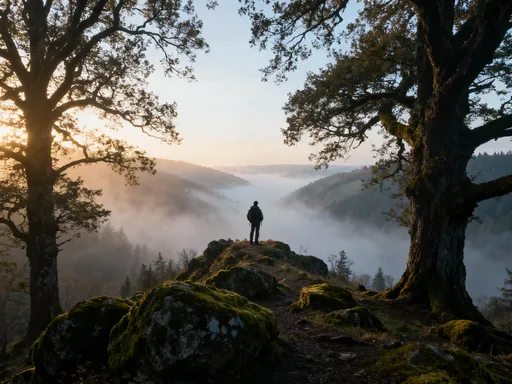
The silence here is profound. Without the hum of traffic or the chatter of other hikers, sound becomes a rare and precious thing. A woodpecker’s staccato tap echoes like a drumbeat. The rustle of a roe deer moving through underbrush sends a ripple of awareness through the air. There are no benches, no signs, no handrails—just nature in its unfiltered form. It’s a place where you can sit for an hour and see no one else, where the only schedule is the slow arc of the sun and the gradual shift of shadows across the forest floor.
This valley is not just a destination—it’s a state of mind. It invites slowness, attentiveness, and a kind of deep listening that modern life rarely allows. To visit is to step into a different rhythm, one dictated not by clocks or notifications, but by the quiet pulse of the natural world. For travelers seeking more than a checklist of sights, this hidden basin offers something far more valuable: the chance to remember what it feels like to simply be present.
Chasing Waterfalls and the Ravines That Hold Them
The Black Forest is home to dozens of small waterfalls, most of them tucked into narrow ravines where seasonal streams cut through soft rock. Unlike the thundering cascades of alpine regions, these falls are intimate—some no more than a few meters high, their waters trickling or tumbling over mossy ledges in delicate displays of motion and sound. Yet their modest size belies their significance. These waterfalls are not just scenic features; they are active agents of erosion, slowly reshaping the landscape one drop at a time. Each cascade is a window into the ongoing process of geological change, where water, gravity, and rock interact in an endless cycle of wear and renewal.
The ravines that cradle these falls are equally remarkable. Carved over centuries by the persistent flow of water, they are often narrow and steep-sided, with walls of sandstone that show visible layers and fractures. In spring, after heavy rains and snowmelt, these gorges come alive—streams swell, waterfalls grow stronger, and the air fills with the misty breath of moving water. This is the best time to visit, when the forest is lush and the falls are at their most dynamic. By late summer, many of these streams dwindle to a trickle, revealing rocky streambeds and dry crevices.
For hikers, exploring these ravines requires care and preparation. Trails can be uneven, with loose gravel and exposed roots. Rocks near waterfalls are often slick with moss and algae, making them treacherous underfoot. Grippy hiking shoes with good ankle support are essential. It’s wise to follow the path of the stream rather than attempt shortcuts up the ravine walls, which can be unstable. Many of the most beautiful falls are not visible from main trails; they require a short detour down a side path or a careful descent to a lower viewpoint.
Safety is paramount. While the urge to get closer for a photograph is understandable, climbing on wet rocks near waterfalls is extremely risky. Instead, hikers are encouraged to observe from designated viewpoints or stable ledges. Some ravines have wooden railings or informational signs, but many do not. The beauty of these places lies in their wildness, but that wildness demands respect. By staying on marked paths and avoiding dangerous maneuvers, visitors can enjoy the magic of these hidden falls without compromising their safety or the integrity of the landscape.
The Magic of the High Moorlands
At elevations above 1,000 meters, the Black Forest transforms once again. The dense woodlands give way to open moorlands—vast, windswept expanses of spongy ground, stunted pines, and hardy grasses. These high moors, or “Hochmoore,” are among the most unique and fragile ecosystems in Central Europe. Formed over thousands of years in cold, wet climates with poor drainage, they are essentially living archives of peat, accumulating slowly as plant matter decomposes in waterlogged conditions. Some of these bogs are over 10,000 years old, preserving pollen, seeds, and even ancient insects in their deep, acidic layers.
Walking across a high moor is an otherworldly experience. The ground feels soft and springy beneath your feet, as if you’re walking on a natural sponge. Pools of dark, tea-colored water reflect the sky, and cotton grass sways in the breeze like tiny torches. The air is cool and still, carrying a faint, earthy scent. In the distance, twisted pines—shaped by relentless wind—stand like sentinels, their branches growing only on the leeward side. The silence is profound, broken only by the call of a curlew or the flapping wings of a passing raven.
These moors are ecologically rare and highly sensitive. A single misstep can damage vegetation that takes decades to recover. For this reason, many of the most important moor areas are protected, with wooden boardwalks guiding visitors through the terrain. Staying on these paths is not just a rule—it’s a responsibility. The plants that thrive here, such as sphagnum moss and carnivorous sundews, are specially adapted to the nutrient-poor environment, and their survival depends on minimal human disturbance.
The moorlands also play a crucial role in water regulation and carbon storage. Their peat layers act like giant sponges, absorbing rainfall and slowly releasing it, helping to prevent flooding downstream. They also sequester large amounts of carbon, making them important allies in the fight against climate change. To walk through a high moor is to stand in a quiet powerhouse of ecological function—a place that may look barren but is in fact teeming with life and purpose. It is a reminder that beauty in nature is not always loud or dramatic; sometimes, it is quiet, subtle, and deeply essential.
How to Travel Deeper—Without Getting Lost
Exploring the wilder parts of the Black Forest requires more than just a sense of adventure—it demands preparation and awareness. The region’s trails are generally well-marked, but once you leave the main routes, signage becomes sparse, and the terrain can be disorienting. To navigate safely, it’s essential to carry a detailed topographic map and a reliable compass, and to know how to use them. GPS devices and smartphone apps can be helpful, but they are not foolproof—batteries die, signals fail, and screens fog up in cold, damp conditions. Downloading offline maps through trusted regional trail apps is a smart backup, but never rely on technology alone.
Timing matters. Starting your hike early in the morning not only helps you avoid crowds but also ensures you have plenty of daylight, especially in the shorter days of spring and autumn. Morning light also enhances the experience—fog rising from valleys, dew sparkling on spiderwebs, and birdsong filling the air. Dressing in layers is crucial, as weather in the highlands can shift rapidly. A sunny start can turn into wind, rain, or even sleet by midday. A waterproof jacket, thermal base layer, and breathable mid-layer will keep you comfortable and safe.
Packing essentials includes more than just clothing. Bring enough water—streams may look clean, but they should not be consumed without filtration. Carry high-energy snacks, a first-aid kit, and a whistle for emergencies. Let someone know your planned route and expected return time. And above all, respect the land. Follow the “leave no trace” principles: pack out all trash, avoid picking plants or disturbing wildlife, and stay on designated trails, especially in sensitive areas like moors and ravines.
Finally, consider supporting local mountain lodges and family-run inns rather than commercial chain accommodations. These small establishments often provide not just shelter and meals, but also invaluable local knowledge—insights into trail conditions, hidden viewpoints, and seasonal changes. By choosing them, you contribute to the sustainability of rural communities and deepen your connection to the region. Traveling deeper means not just going farther—it means moving with care, awareness, and gratitude.
The Reward of Going Off the Beaten Path
There is a quiet transformation that happens when you step away from the crowds and into the heart of the wild Black Forest. The noise of daily life—the emails, the notifications, the endless to-do lists—fades into the background, replaced by the rustle of leaves, the murmur of streams, and the vast silence between breaths. This is not just a change of scenery; it is a shift in consciousness. In these secluded clearings and hidden valleys, time slows. Your senses sharpen. You begin to notice things you’ve long forgotten how to see: the pattern of bark on an ancient tree, the way light filters through a canopy, the delicate balance of a spiderweb strung between branches.
Modern travel often revolves around accumulation—collecting photos, checking off landmarks, maximizing experiences. But true fulfillment comes not from how much you see, but from how deeply you feel. The wild places of the Black Forest offer something rare in our hyper-connected world: the gift of presence. Here, there are no filters, no algorithms, no distractions. There is only the moment, the land, and the quiet hum of being alive.
And with this presence comes a sense of responsibility. These landscapes are not endless resources; they are fragile, irreplaceable treasures shaped by forces beyond human control. Every footprint matters. Every choice—to stay on the path, to pack out waste, to travel gently—has weight. To explore the Black Forest in its deepest form is not just a privilege; it is a pact with nature, a promise to witness without harming, to take only memories, and to leave only respect.
So if you’re ready to move beyond the postcards, to trade the familiar for the authentic, the crowded for the quiet, then let the forest welcome you. Let its ancient trees stand as witnesses to your stillness. Let its streams carry away your worries. And in return, carry forward a deeper understanding: that the greatest journeys are not measured in miles, but in moments of silence, in breaths of clean air, in the profound peace of knowing you’ve touched something timeless.